
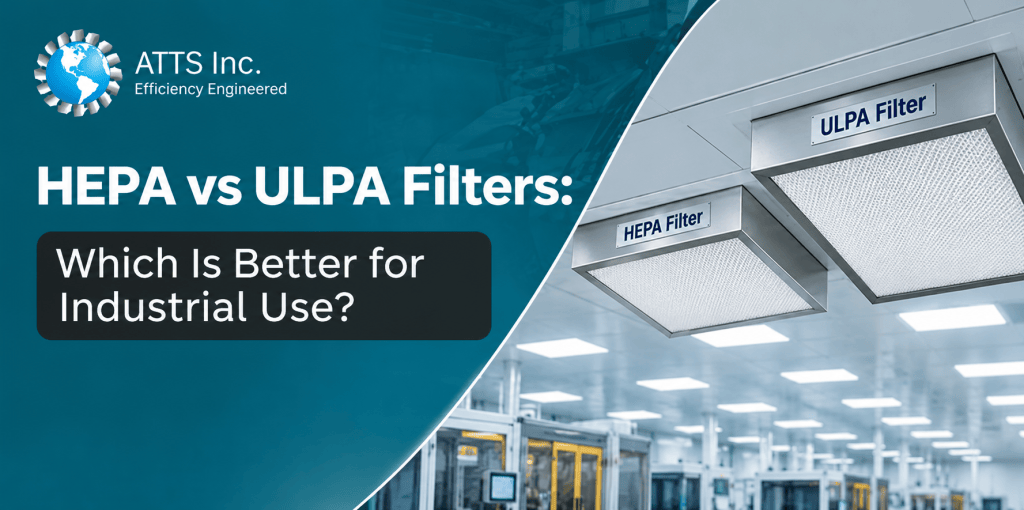
Clean air plays an important role in industries where airborne particles can affect product quality, equipment performance, and safety. From pharmaceutical manufacturing to electronics production, choosing the right air filtration system helps maintain a controlled environment.
HEPA and ULPA filters are commonly used in facilities requiring high levels of air cleanliness. Although both remove extremely small particles, they differ in efficiency, applications, and operating costs.
Understanding these differences can help businesses choose the right filtration solution.
What Are HEPA Filters?
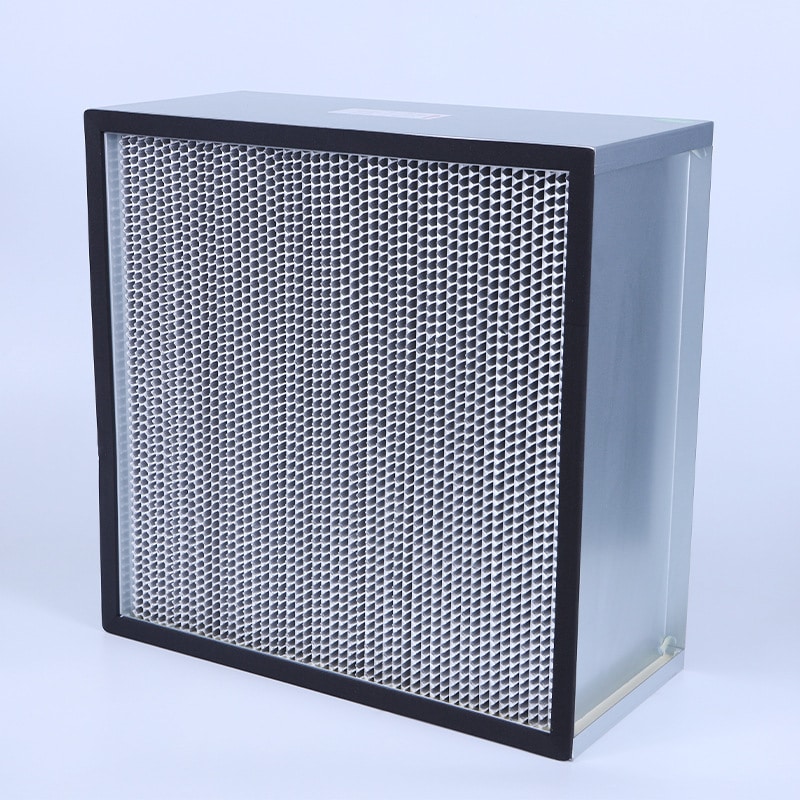
HEPA stands for High Efficiency Particulate Air. These filters capture fine airborne particles, including dust and other particulate contaminants.
HEPA filters are widely used in industrial environments where maintaining clean air is essential for manufacturing processes and equipment protection.
Under EN 1822 classifications, H13 HEPA filters achieve at least 99.95% efficiency, while H14 filters achieve at least 99.995% efficiency at the most penetrating particle size (0.1-0.3μm).
Common applications include:
- Pharmaceutical manufacturing facilities
- Hospitals and laboratories
- Data centers and control rooms
- Industrial cleanrooms
- Electronics manufacturing
HEPA filters effectively remove particles and suit many industrial applications without requiring the highest filtration classification.
What Are ULPA Filters?
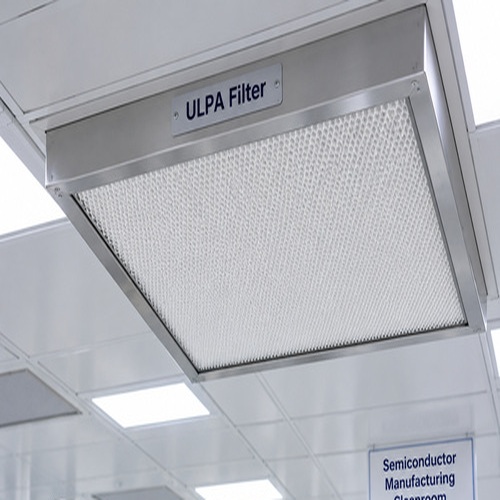
ULPA stands for Ultra Low Penetration Air. These filters provide higher particle removal efficiency than HEPA filters and are designed for environments requiring exceptionally clean air.
Under EN 1822, U15 ULPA filters achieve at least 99.9995% efficiency at the most penetrating particle size(0.1-0.3μm).
ULPA filters are particularly useful in manufacturing processes where even minimal airborne contamination can affect product quality.
Common applications include:
- Semiconductor manufacturing
- Microelectronics production
- Advanced research laboratories
- High-cleanliness cleanrooms
- Precision manufacturing facilities
Although ULPA filters offer greater efficiency, they may involve higher purchase costs and additional airflow considerations.
HEPA vs ULPA: Key Differences
| Factor | HEPA (H13-H14) | ULPA (U15-U17) |
| Efficiency | 99.95% – 99.995% | 99.9995% – 99.999995% |
| Airflow resistance | Relatively Lower | Higher |
| Energy use | Moderate | Higher |
| Cost | Lower | Higher |
| Typical use | Hospitals, pharma, data centers, control rooms | Microelectronics, semiconductor cleanrooms |
Where Are HEPA and ULPA Filters Used?
Clean process filters (EPA, HEPA, and ULPA) protect some of the most demanding industrial environments:
- Data centers: keep dust away from servers and cooling systems
- Pharmaceuticals: maintain sterile production and compliance
- Hospitals: protect patients and critical care areas
- Control rooms: safeguard sensitive electronics and operators
- Microelectronics: prevent sub-micron contamination that lowers yield
Which Is Better for Industrial Use?
Neither is better in every case. The right choice depends on how clean your process needs to be.
Choose HEPA if:
- You run pharmaceutical, hospital, data center, or control room environments
- You need dependable, high-grade filtration without extreme energy costs
- Your process tolerates trace-level particles
Choose ULPA if:
- You work in microelectronics or semiconductor manufacturing
- Sub-micron contamination directly affects product yield
- Your cleanroom class demands the tightest particle control
For most facilities, HEPA is the practical and economical answer. ULPA makes sense when the cost of contamination is far higher than the cost of extra energy and filter spend.
What to Consider Before You Decide
- Process requirements. Check the ISO class or regulatory standard you must meet. Over-specifying wastes money, while under-specifying risks product loss.
- Total cost of ownership. Compare pressure drop, energy use, and replacement intervals together, not just the purchase price.
- Pre-filtration. Pairing HEPA or ULPA filters with Pre-filters and Fine-filters protects them from coarse dust and extends their life.
Frequently Asked Questions
1. Is ULPA always better than HEPA?
No. ULPA is more efficient, but it adds cost and airflow resistance. For many industrial applications, HEPA delivers all the cleanliness required Your process determines whichever is better
2. Can I replace a HEPA filter with a ULPA filter?
Not always. ULPA filters have a higher pressure drop, so your fans, housing, and ductwork must be able to handle it. Have your system assessed by an HVAC specialist first.
3. Which industries need ULPA filters?
ULPA is most common in microelectronics and semiconductor fabrication, where tiny particles affect product quality. HEPA covers most data center, pharmaceutical, hospital, and control room needs.
4. How often should HEPA and ULPA filters be replaced?
It depends on the environment, dust load, and pre-filtration. Monitor pressure drop and replace when it reaches the manufacturer’s limit, rather than relying on a fixed calendar.
5. Do HEPA and ULPA filters remove gases and odors?
No. They capture particles only. For VOCs, odors, or chemical vapors, you need carbon filtration in series with HEPA/ULPA.
Get the Right Filtration for Your Facility
Choosing between HEPA and ULPA is easier with an expert who understands your process. At ATTS Inc, we supply EPA, HEPA, and ULPA filters (up to 99.999995% efficiency per EN 1822:2009) for data centers, pharmaceuticals, hospitals, control rooms, and microelectronics, along with carbon filtration and dust and fume collectors.
Ready to find the right filter for your application? Email sales@atts-inc.com, call +1-856-810-0006, or request a quote today.