
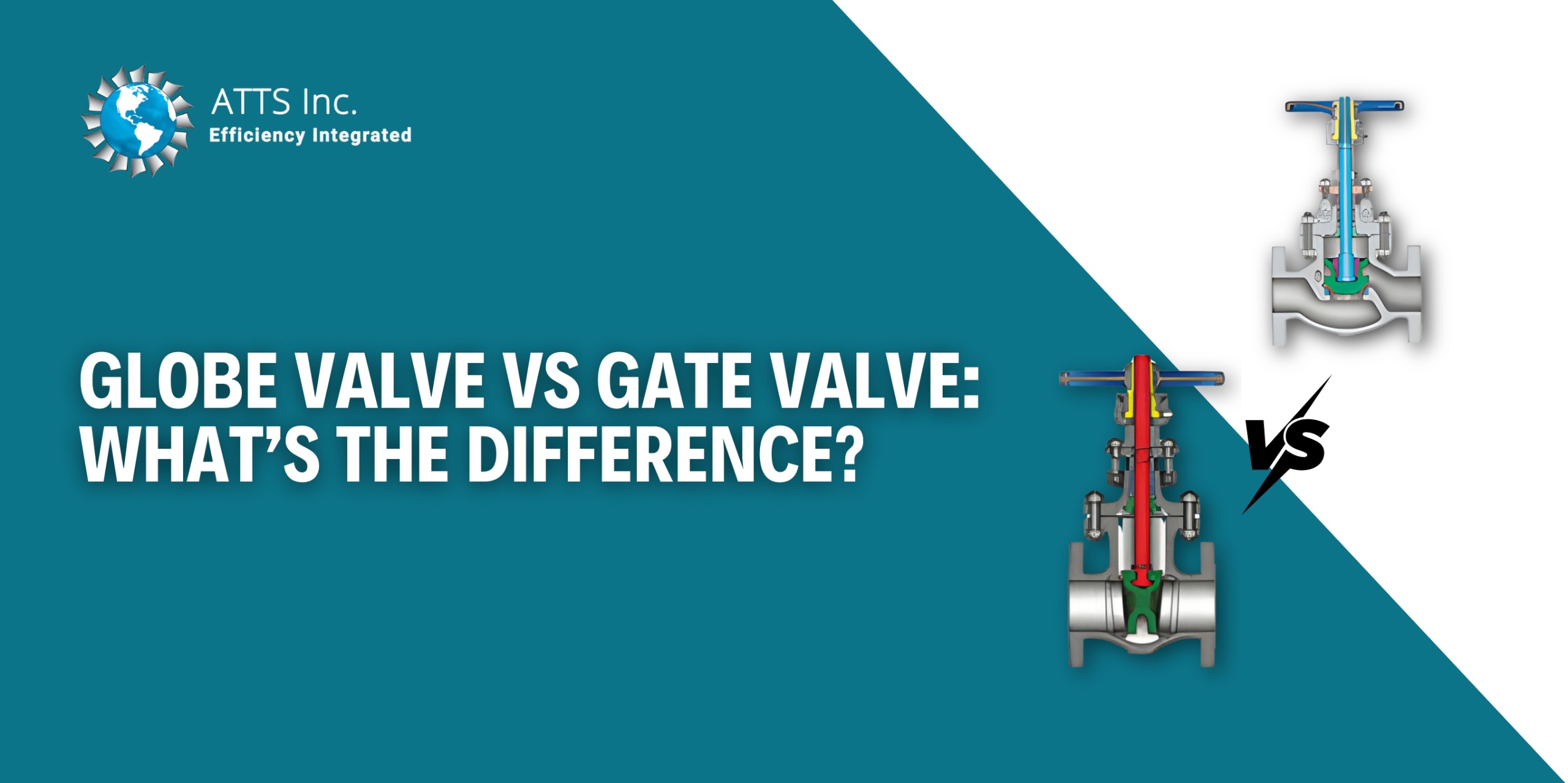
In industrial systems such as power plants, oil & gas facilities, refineries, and heavy manufacturing units, selecting the correct valve type is critical for operational efficiency and safety. Two of the most commonly used industrial valves are globe valves and gate valves.
Although both are widely used in piping systems, they serve different purposes. Understanding the difference between a globe valve and a gate valve helps engineers, procurement managers, and maintenance teams choose the right solution for their application.
At ATTS Inc., we support industrial facilities by supplying high-quality mechanical equipment, including globe valves, gate valves, pressure relief valves, and other critical flow control components.
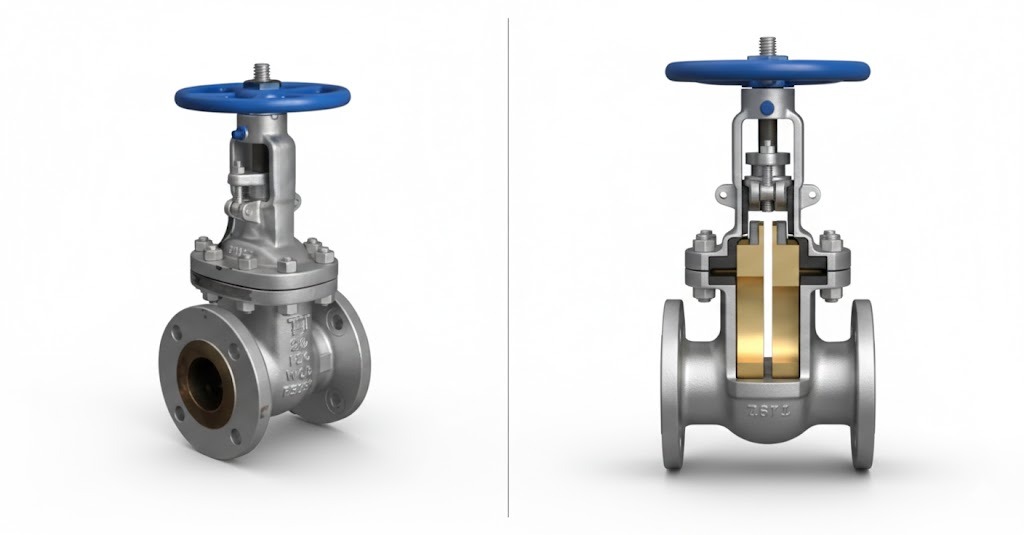
A globe valve is primarily designed for flow regulation and throttling applications. Its internal structure consists of a movable disc and a stationary seat ring inside a spherical body. When the valve stem moves up or down, it controls the flow rate with precision.
Because the fluid changes direction within the valve body, globe valves offer greater resistance than gate valves. However, this design makes them ideal for applications that require accurate control of steam, water, or fuel flow.
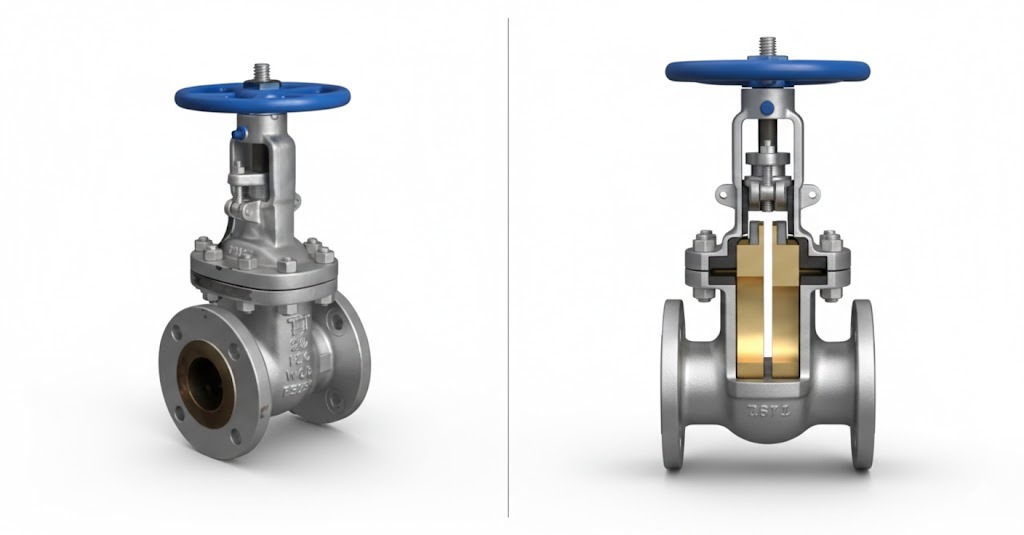
A gate valve is designed mainly for on/off isolation. It uses a flat or wedge-shaped gate that lifts completely out of the flow path when fully open. This allows fluid to pass through with minimal obstruction.
Gate valves are widely used in main pipeline systems, water distribution lines, oil transmission networks, and high-pressure steam systems.
If precise flow control is required, a globe valve is the better option. For simple shutoff or isolation, a gate valve is more efficient.
One of the major differences between a globe valve and a gate valve is pressure loss.
Globe valves are engineered specifically for throttling applications. The disc design allows gradual adjustment of flow.
Gate valves should not be used for throttling. When partially open, they can experience vibration, erosion, and seat damage.
One of the major differences between a globe valve and a gate valve is pressure loss.
Globe valves are better suited for frequent operation and adjustment. Gate valves are better suited to systems that remain either fully open or fully closed.
Using the wrong valve type in industrial systems can lead to premature wear, leakage, or efficiency loss. This is why experienced suppliers such as ATTS Inc. assist clients in selecting the right industrial valves based on pressure rating, temperature range, and system requirements.
In power plants and refineries, both globe valves and gate valves play essential roles:
Industrial facilities depend on high-performance mechanical components, including valves, pumps, expansion joints, and pressure relief valves, to maintain efficiency and safety compliance.
Choosing the correct valve ensures:
Feature | Globe Valve | Gate Valve |
Primary Function | Flow Regulation | Isolation |
Pressure Drop | High | Low |
Throttling | Excellent | Not Recommended |
Flow Path | S-shaped | Straight |
Ideal For | Steam & Control Systems | Main Pipeline Isolation |
When comparing a globe valve vs. a gate valve, the choice depends entirely on application requirements.
If your system requires precise control, frequent adjustment, and throttling capability, a globe valve is the correct solution.
If you need simple isolation with minimal pressure loss, a gate valve is a better choice.
Working with experienced industrial suppliers like ATTS Inc. ensures that your facility receives the correct valve type, pressure class, and material specification to meet operational demands.
Need the right valve for your system?
ATTS Inc. supplies high-quality globe and gate valves from reputed manufacturers for demanding industrial applications.
📞 Contact us today for expert guidance and reliable solutions.