

Gas turbine generators are widely used in power plants worldwide because they are fast, flexible, and efficient sources of electricity. But how exactly do they turn fuel into electrical power? In this clear and beginner-friendly guide, we’ll break down the gas turbine working principle, the Brayton cycle, and how the turbine connects to the generator to deliver reliable power to the grid.
If you are new to gas turbines, this is the best place to start — and you can always refer to our main pillar page here:
→ Gas Turbines for Power Generation: Complete Beginner-Friendly Guide
ATTS Inc., a trusted global provider of gas turbine parts and engineering support for power plants, uses this technology to help industries maintain reliable and efficient electricity generation.
What Is a Gas Turbine Generator?
A gas turbine generator, also known as a gas turbine electric generator, is a system that produces electricity using high-temperature, high-pressure gases. It combines two major components
- Gas Turbine – Converts fuel energy into rotational power
- Generator – Converts rotational power into electricity
This technology is widely used in:
- Utility power stations
- Oil & gas platforms
- Industrial captive power plants
- Remote or backup power systems
- Peaking and grid balancing operations
Compared to steam plants, gas turbines offer:
- Faster startup
- Cleaner emissions with natural gas
- Smaller installation footprint
Many clients supported by ATTS Inc. choose gas turbine power systems because they deliver rapid response and steady performance during high energy demand.
The Simple Working Principle of a Gas Turbine Generator
Gas turbines operate on the Brayton Cycle — a continuous thermodynamic process where air is compressed, heated, and expanded to create rotational force.
Gas Turbine Working Cycle (Step-by-Step)
- Air Intake
Clean air enters the turbine through the air intake filtration system. - Compression
The compressor squeezes air, increasing pressure and temperature. - Combustion
Fuel is injected and ignited, creating extremely hot gases. - Expansion Through the Turbine
Hot gases expand and spin turbine blades at high speed. - Power Generation
The spinning turbine rotates a shaft connected to a generator, producing electricity for the grid.
This process repeats continuously, allowing high power output in a short time.
The Brayton Cycle in Simple Terms
| Stage | What Happens | Component |
| Compression | Air pressure increases | Compressor |
| Combustion | Fuel burns and releases heat | Combustor |
| Expansion | Hot gas rotates turbine blades | Turbine section |
As long as air + fuel + spark are available, the turbine continues generating power without interruption.
How the Generator Converts Rotation into Electricity
Electricity is created in the generator, not the turbine itself.
Here’s how it works:
- The turbine spins a rotor inside the generator
- The moving magnetic field interacts with the stator windings
- This induces an electrical current
- Current is stepped up and supplied to the power grid
In simple words:
Motion → Magnetic Field → Electricity
This principle is known as electromagnetic induction.
Real-Life Example: Meeting Peak Power Demand
On extremely hot afternoons, when millions switch on air-conditioning systems, utilities may struggle to maintain the power supply. Gas turbines provide the perfect solution because:
- They start in minutes
- They support peak demand
- They help keep the electrical grid stable
For this reason, many power plants — including those supported by ATTS Inc. — depend on gas turbines in emergency and peak demand situations.
Types of Gas Turbine Generators
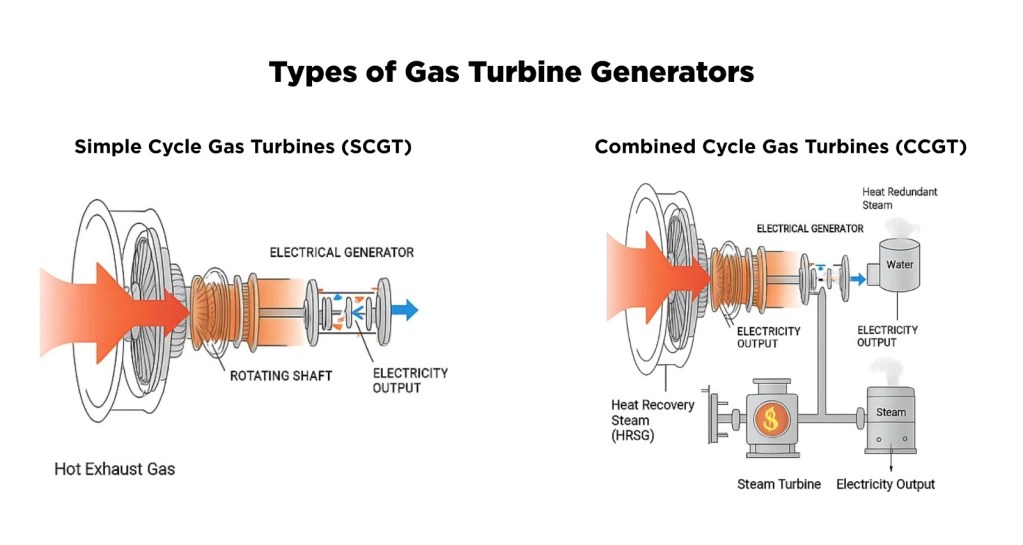
Simple Cycle Gas Turbines (SCGT)
- Generate power directly from the gas turbine
- Efficiency: ~30–40%
- Best for backup and peaking power
Simple Cycle Gas Turbines (SCGT)
- Use exhaust heat to run a steam turbine
- Efficiency: up to 55–62%
- Best for continuous baseload power plants
For a deeper look at turbine components: → Gas Turbine Parts & Their Functions
What Improves Gas Turbine Efficiency?
| Factor | Impact |
| Clean intake air | Prevents compressor fouling |
| Fuel purity | Improves combustion & lowers emissions |
| Routine maintenance | Reduces performance losses |
| High firing temperature | Higher efficiency output |
Modern turbines use special alloys and cooling channels to survive extreme thermal loads.
Learn more about parts and replacement needs: → Types of Gas Turbine Parts Used in Power Plants & Their Replacement Needs
Why Maintenance Services Are Important
Gas turbines are high-value assets with thousands of precision parts. To ensure reliable operations, plants regularly perform:
- Borescope inspections
- Hot gas path inspections
- Overhauls
- Filter and blade maintenance
Maintenance benefits include:
- Better fuel efficiency
- Longer part life
- Increased safety and uptime
See the full maintenance overview: → Gas Turbine Parts & Maintenance Services for Power Plants
ATTS Inc. supports power plants with inspection, overhaul assistance, filtration services, and quality parts to keep turbines running at peak performance.
Advantages of Gas Turbine Generators
- High power-to-weight ratio
- Quick ramp-up capability
- Lower emissions than coal
- Fuel flexibility
- Compact and scalable design
These advantages make gas turbines vital as nations shift toward cleaner and more reliable power solutions.
FAQs — Gas Turbine Working Principle
- What fuels do gas turbines use?
Mainly natural gas, but also diesel, kerosene, LPG, and biofuels. - How fast can a gas turbine start?
Some reach full power in under 10 minutes. - Are gas turbines like jet engines?
Yes — same principle, but in power plants the turbine drives a generator. - How hot are turbine combustion gases?
Often above 1,200°C, requiring advanced blade cooling. - Why are combined cycle plants more efficient?
They reuse exhaust heat to generate extra power.
Conclusion — How ATTS Inc. Supports Gas Turbine Power
A gas turbine generator transforms fuel into electricity through the efficient process of air compression, combustion, and expansion. This powerful technology supports national grids, industrial operations, and emergency power needs.
For spare parts support, filtration upgrades, or maintenance expertise, ATTS Inc. is a reliable global partner helping power plants improve turbine performance and reduce operational downtime.