
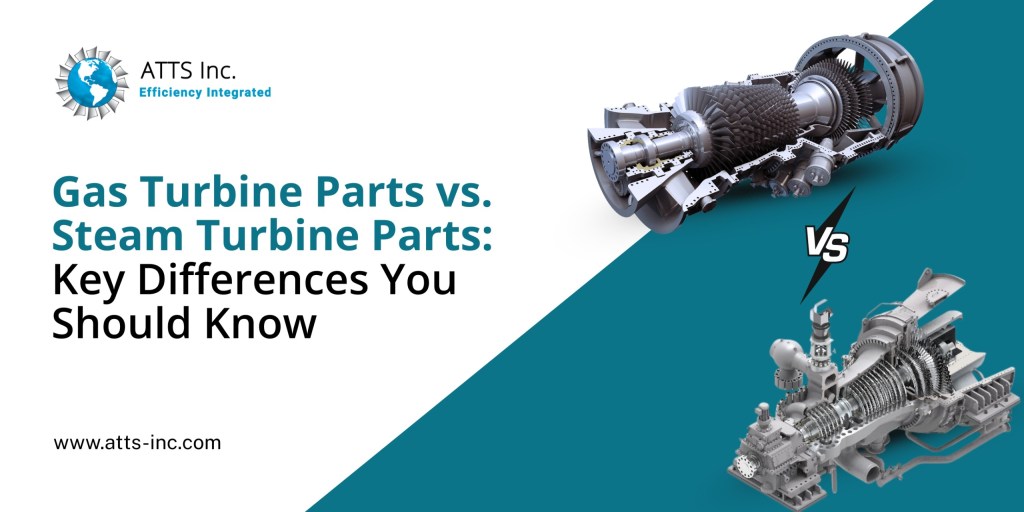
Turbines are the driving force behind modern power generation, converting fuel or steam into mechanical energy that powers electricity-generating turbines. While both gas turbines and steam turbines serve critical roles in industries such as power generation, oil & gas, and manufacturing, the parts that make them work differ in design and function. Understanding the key differences between gas turbine parts and steam turbine parts is essential for plant operators, procurement teams, and engineers. It helps ensure you choose the right equipment, spare parts, and maintenance practices for optimal performance.
Why Compare Gas Turbine and Steam Turbine Parts?
At first glance, both turbines may seem similar—they each have a rotor, casings, bearings, and auxiliary systems. However, their design, operating principles, and parts requirements differ because they rely on different working fluids:
- Gas turbines use combustion gases generated by burning fuel.
- Steam turbines use high-pressure steam produced in a boiler.
These differences influence the types of parts used, their durability, and their maintenance needs.
Key Differences Between Gas Turbine and Steam Turbine Parts
1. Combustion System vs. Boiler
- Gas Turbines: A significant part of a gas turbine is the combustion system, which mixes fuel (like natural gas or liquid fuel) with compressed air and ignites it. The hot gases expand through turbine blades to produce power.
- Steam Turbines: Steam turbines do not have a combustion system inside the turbine itself. Instead, they rely on an external boiler or heat recovery steam generator (HRSG) to create steam, which is then directed into the turbine.
Key takeaway: Gas turbines require combustion chambers and fuel injectors, while steam turbines depend on a separate boiler system.
2. Hot Gas Path Parts vs. Steam Path Parts
- Gas Turbines: The “hot gas path” is one of the most critical areas. It includes turbine blades, vanes, nozzles, and shrouds, all of which must withstand temperatures exceeding 1,000°C. These parts require advanced alloys and thermal barrier coatings to prevent damage.
- Steam Turbines: Instead of hot combustion gases, steam turbines deal with high-pressure steam. The steam path includes blades and diaphragms designed to handle both high pressure and moisture. Erosion from water droplets is a common concern, so steam turbine parts are often designed with anti-erosion coatings and materials.
Key takeaway: Gas turbines focus on heat resistance, while steam turbines focus on pressure and erosion resistance.
3. Compressor vs. Condenser
- Gas Turbines: They include a compressor section that draws in air and compresses it before sending it to the combustion chamber. This compressor is one of the largest and most energy-intensive parts of a gas turbine.
- Steam Turbines: Instead of a compressor, steam turbines work with a condenser, which cools exhaust steam back into water so it can be reused in the boiler. The condenser is vital for maintaining efficiency in the steam cycle.
Key takeaway: Gas turbines compress air internally, while steam turbines rely on external systems to recycle steam.
4. Bearings and Rotors
Both turbines rely heavily on bearings and rotors to support the moving parts.
- Gas Turbines: Bearings must handle very high rotational speeds (up to 3,600 RPM or more) and extreme heat from the hot gas path.
- Steam Turbines: Bearings in steam turbines must manage large axial loads caused by steam pressure and moisture forces. They often need robust sealing systems to prevent steam leakage.
Key takeaway: While both turbines use bearings and rotors, gas turbine parts focus on high speed and heat, while steam turbine parts focus on load management and sealing.
5. Auxiliary and Support Systems
- Gas Turbines: Require auxiliary systems such as fuel supply systems, lube oil systems, inlet air filtration, and advanced control systems.
- Steam Turbines: Depend heavily on boiler feed pumps, condensate pumps, water treatment systems, and cooling towers to keep the steam cycle running.
Key takeaway: Gas turbines rely on fuel and air management, while steam turbines rely on water and steam cycle management.
6. Maintenance Cycles
- Gas Turbines: Parts like hot gas path components (blades, vanes, combustion liners) require regular inspection and replacement because of extreme heat stress. Maintenance outages are usually scheduled every few thousand operating hours.
- Steam Turbines: Parts wear more slowly but are affected by corrosion, scaling, and erosion. Steam quality is critical—poor water treatment can damage blades and seals. Maintenance often focuses on inspecting seals, bearings, and steam path erosion.
Key takeaway: Gas turbine maintenance is heat-focused, while steam turbine maintenance is moisture- and corrosion-focused.
Summary of Differences at a Glance
| Feature / Part | Gas Turbine Parts | Partes de turbina de vapor |
| Energy Source | Combustion gases | High-pressure steam |
| Key Component | Combustion chamber + hot gas path | Boiler + steam path |
| Special Focus | Heat resistance & coatings | Pressure & erosion resistance |
| Air/Steam Management | Compressor | Condenser |
| Auxiliary Systems | Fuel supply, air filtration, controls | Pumps, condensers, water treatment |
| Common Maintenance Concern | Overheating & thermal fatigue | Corrosion, scaling, moisture erosion |
Conclusion: Choosing the Right Turbine Parts
Both gas turbine parts and steam turbine parts are essential for modern industries, but their designs and challenges differ greatly.
- Gas turbines demand parts that can endure extreme heat and high speeds.
- Steam turbines require parts that can handle pressure, steam quality, and moisture erosion.
For plant operators and engineers, understanding these differences helps in planning maintenance, sourcing the right spare parts, and improving reliability. At ATTS Inc., we provide a wide range of OEM-compliant gas and steam turbine parts, ensuring your machinery runs efficiently and reliably. Whether you need outage kits, hot gas path components, or critical steam turbine spares, our team can support your operational needs with quality and expertise.
Preguntas frecuentes
- What is the most significant difference between gas and steam turbine parts?
Gas turbines rely on combustion chambers and hot gas path parts, while steam turbines rely on boilers and steam path components. - Which turbine parts wear out fastest?
In gas turbines, hot gas path parts (blades, vanes) wear fastest due to heat. In steam turbines, blades and seals suffer from erosion and corrosion. - Do gas turbines or steam turbines require more maintenance?
Gas turbines typically need more frequent inspections due to heat stress, while steam turbines need careful water/steam management to avoid corrosion issues. - Can one supplier provide both gas and steam turbine parts?
Yes. Suppliers like ATTS Inc. specialize in both, offering a full range of outage kits and critical spare parts. - Which industries use gas vs. steam turbine parts?
Gas turbine parts are common in power plants, aviation, and oil & gas, while steam turbine parts are widely used in thermal power, chemical, and paper industries.