
Air filtration plays a crucial role in protecting industrial machines, turbines, compressors, and power plants from contamination. While air filters may look simple, they perform complex functions that directly affect equipment performance, efficiency, and longevity. At ATTS Inc., we specialize in advanced air filtration systems engineered for harsh industrial environments, and this beginner’s guide will help you understand precisely what air filters do and how they work.
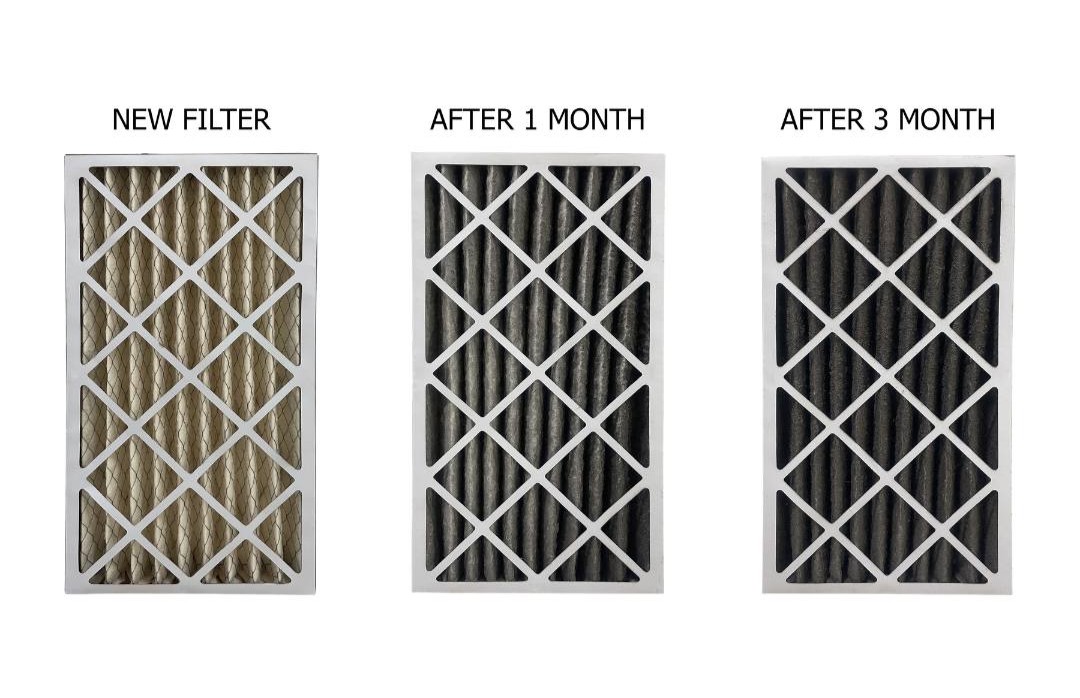
In any industrial facility, the air entering machinery usually contains contaminants such as dust, sand, soot, chemicals, moisture, and corrosive particles. The job of an air filter is to remove these impurities before they reach the machine’s internal components.
Air filters support machinery by:
This is important for all processes that require clean air, especially in power plants, where uninterrupted, efficient performance is essential.
Understanding how air filters work is easier than it seems. Although different industries use various filter types, most systems follow these core steps:
The filtration process begins when outside air is pulled into the machine. In industrial or power generation locations, this air is often filled with pollutants—especially in regions with dust storms, humidity, or industrial emissions.
The first defense layer is called the pre-filter. Its job is to capture large contaminants, such as dust, insects, fibres, and debris. This step prevents premature clogging of finer filters downstream.
Common pre-filter examples include:
After passing through the pre-filter, the air moves into the fine filtration stage, where smaller particles are captured. ATTS Inc. supplies EPA & HEPA turbine filters designed to trap microscopic contaminants while maintaining efficient airflow.
Fine filters prevent:
Power plants in dusty regions often rely on self-cleaning of filters. These filters automatically remove accumulated dust using controlled air pulses, preventing pressure drop and reducing manual maintenance.
This makes them ideal for:
Finally, the filtered air enters the turbine, generator, HVAC system, or compressor. Clean air ensures:
This is one of the key reasons air filtration is emphasised in guides such as Why Air Filtration Is Important for Machines and Power Plants, where the relationship between clean air and system performance is thoroughly discussed.
Dirty or unfiltered air can cause:
Clean air keeps internal surfaces clear of particulate buildup and helps equipment operate at optimal load. In fact, when exploring topics like Different Types of Air Filters Used in Power Plants and Industry, it becomes clear that choosing the right filtration system plays a significant role in reducing operating costs for power plants and heavy machinery.
Air filters come in many forms, each designed for specific conditions:
Catch large particles and extend the life of secondary filters.
Remove microscopic-range airborne particles that can damage turbines.
Ideal for dusty, corrosive, or coastal environments.
Remove fumes, odors, and corrosive gases to protect sensitive components.
Used in hot-air systems, exhaust lines, and specialized industrial setups.
ATTS Inc. provides all these filter types, engineered to match the needs of gas turbines, compressors, HVAC units, and other power equipments
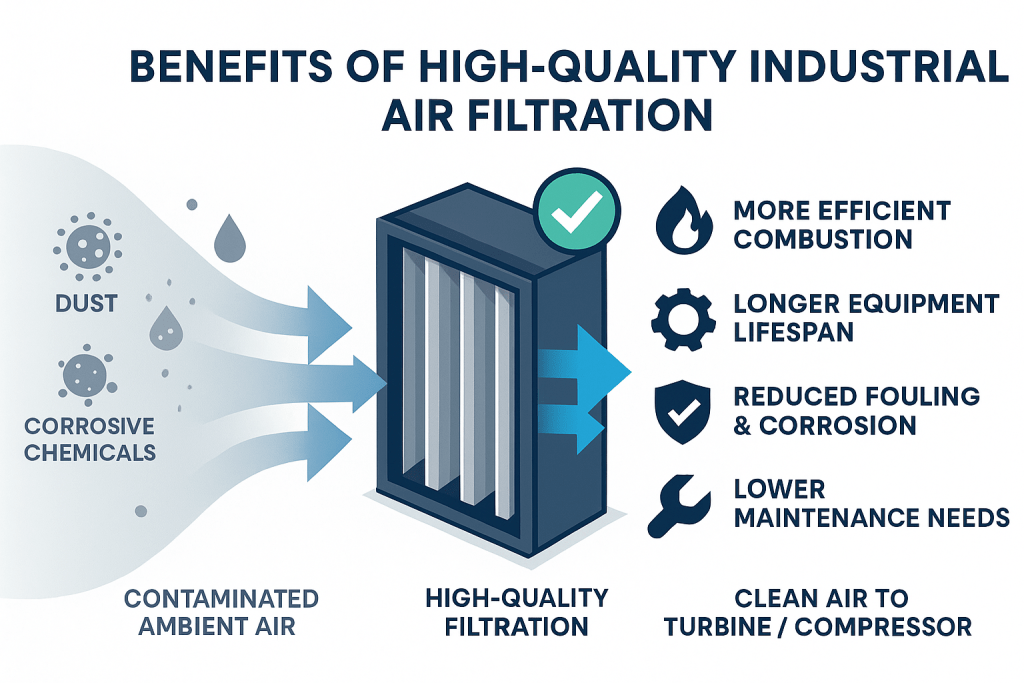
Using a high-performance filtration system offers several advantages:
These benefits tie directly into broader filtration topics, such as Common Problems Caused by Dirty or Clogged Air Filters, which highlight the risks of inadequate filtration.
1. What contaminants do industrial air filters remove?
Dust, sand, soot, chemicals, moisture, and corrosive particles are commonly found in industrial environments.
2. How often should air filters be checked?
Many facilities inspect filters monthly or use pressure-drop monitoring to determine replacement timing.
3. What is the difference between pre-filters and fine filters?
Pre-filters catch large particles, while fine filters remove microscopic contaminants.
4. Do air filters really improve turbine efficiency?
Yes. Cleaner air improves combustion, reduces fouling, and increases power output.
5. Does ATTS Inc supply industrial and power plant air filters?
Absolutely. ATTS offers air filtration solutions for turbines, compressors, HVAC systems, and other heavy-duty applications