
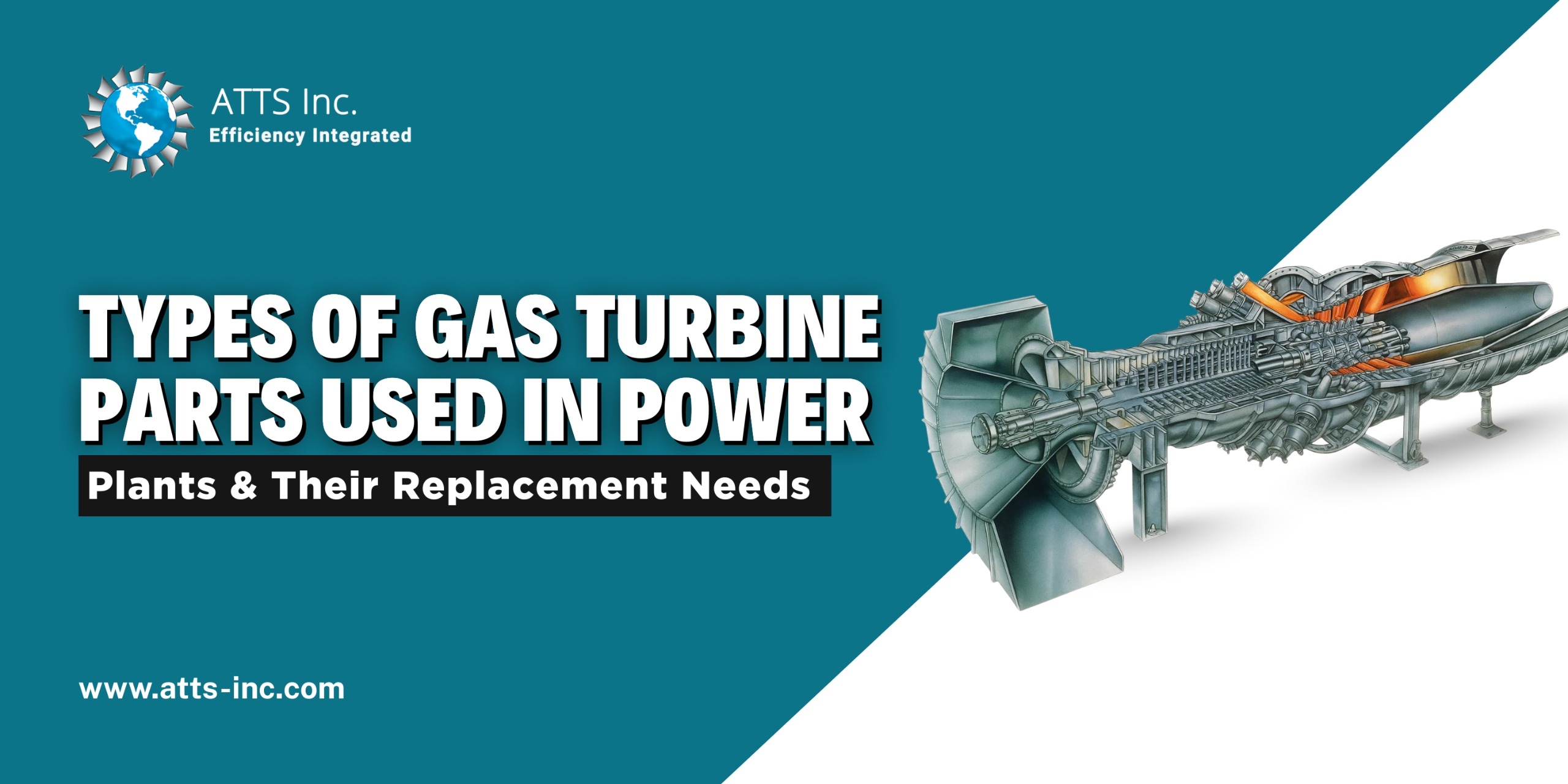
Gas turbines operate in extremely demanding temperature and pressure conditions. Over time, various components naturally wear out and need replacement to keep the plant running efficiently and safely. Understanding which turbine parts age faster—and why—helps operators plan maintenance, avoid unplanned outages, and maintain consistent power output.
This guide breaks down turbine part categories, typical life cycles, and replacement best practices in simple, beginner-friendly language.
If you need a quick overview of basic part functions, refer to:→ Gas Turbine Parts & Their Functions.
ATTS Inc., a global provider of high-quality gas turbine components and engineering support, assists power plants worldwide in choosing the right replacement strategy and maintaining peak turbine performance.
Gas turbine parts can be grouped into two primary categories based on the temperatures they experience:
Category | Temperature Exposure | Example Parts | Replacement Frequency |
Hot Section Parts | Very high combustion temperatures | Turbine Blades, Vanes, Combustor Liners, Transition Pieces | Most frequent |
Cold Section Parts | Cooler airflow regions | Filters, Compressor Blades, Bearings, Casings | Less frequent |
This classification helps operators prioritize inspections and plan outage schedules effectively.
Hot section components operate directly in the combustion gas path where temperatures often exceed 1,200°C. They are exposed to intense stresses such as:
1. Turbine Blades
Extract energy from expanding gases to rotate the shaft.
Replace when: thermal cracks, erosion, or coating loss appear.
2. Nozzles (Guide Vanes)
Direct hot gases toward the turbine blades at optimal angles.
Replace when: distortion, overheating damage, or erosion is detected.
3. Combustion Liners
Shape and contain the flame inside the combustor.
Replace when: cracking, scorching, or metal weakening occurs.
4. Transition Pieces
Carry high-temperature gases from the combustor into the turbine.
Replace when oxidation, metal thinning, or leakage is observed.
Because hot section components have a direct impact on power output and turbine safety, they require the most frequent inspection, refurbishment, and replacement.
Cold section components do not experience high combustion temperatures but still face mechanical wear due to dust, vibration, and long operating hours.
1. Air Intake & Filters
Prevent dirt, sand, and pollutants from entering the compressor.
Replace when: filters are clogged or airflow efficiency drops.
2. Compressor Blades
Accelerate and compress air entering the combustion chamber.
Replace when: fouling, erosion, or blade edge damage occurs.
3. Bearings & Seals
Allow smooth high-speed rotation of the shaft.
Replace when: wear, lubrication contamination, or overheating signs appear.
4. Casings & Structural Components
Maintain alignment and structural stability.
Replace when fatigue, warping, or long-term metal degradation is detected.
Ignoring cold section wear can lead to efficiency loss, higher fuel consumption, or vibration-related failures.
Several factors determine how often parts must be replaced:
Most power plants follow these industry-standard intervals:
Inspection Type | Typical Interval | Focus Area |
Combustion Inspection (CI) | 8,000–12,000 hours | Combustor & fuel nozzles |
Hot Gas Path Inspection (HGPI) | 24,000–30,000 hours | Turbine blades & vanes |
Major Overhaul | 48,000+ hours | Full internal inspection including rotor |
Modern plants increasingly use condition-based monitoring to extend service life when performance remains stable.
Not all worn parts must be discarded. Many components—especially hot section parts—can be successfully refurbished through:
Refurbishment can reduce costs by 40–60% while maintaining OEM-level performance.
ATTS Inc. partners with certified repair facilities to help operators choose the safest and most economical option.
Turbines operating in challenging environments experience faster degradation, especially in:
This makes high-efficiency air filtration and regular inspection essential.
For more on airflow and filtration systems, see: → Gas Turbine Parts & Their Functions
Operators should watch for:
Addressing these issues early prevents forced outages and expensive emergency repairs.
ATTS Inc. provides power plants with:
A strategic parts partner helps maintain turbine health while minimising downtime and operational risk.
1. Which parts are replaced most often?
Turbine blades, vanes, and combustor liners are subject to extreme heat exposure.
2. How long does a major overhaul take?
Typically 4–8 weeks, depending on turbine size and part condition.
3. Are refurbished blades as reliable as new ones?
Yes—when repaired by certified experts and recoated properly.
4. Why do coastal plants need faster replacement?
Salt-laden air accelerates corrosion and coating breakdown.
5. Is scheduled maintenance better than forced outages?
Absolutely. Planned outages cost far less and prevent major failures.
Knowing which turbine parts wear out and when to replace them is essential for consistent, safe, and efficient power generation. With the right maintenance strategy—and support from experts like ATTS Inc.—power plants can extend part life, reduce downtime, and maintain strong performance throughout the turbine’s operating cycle.
ATTS Inc. remains a trusted global partner for spare parts procurement, inspection assistance, and turbine overhaul support.