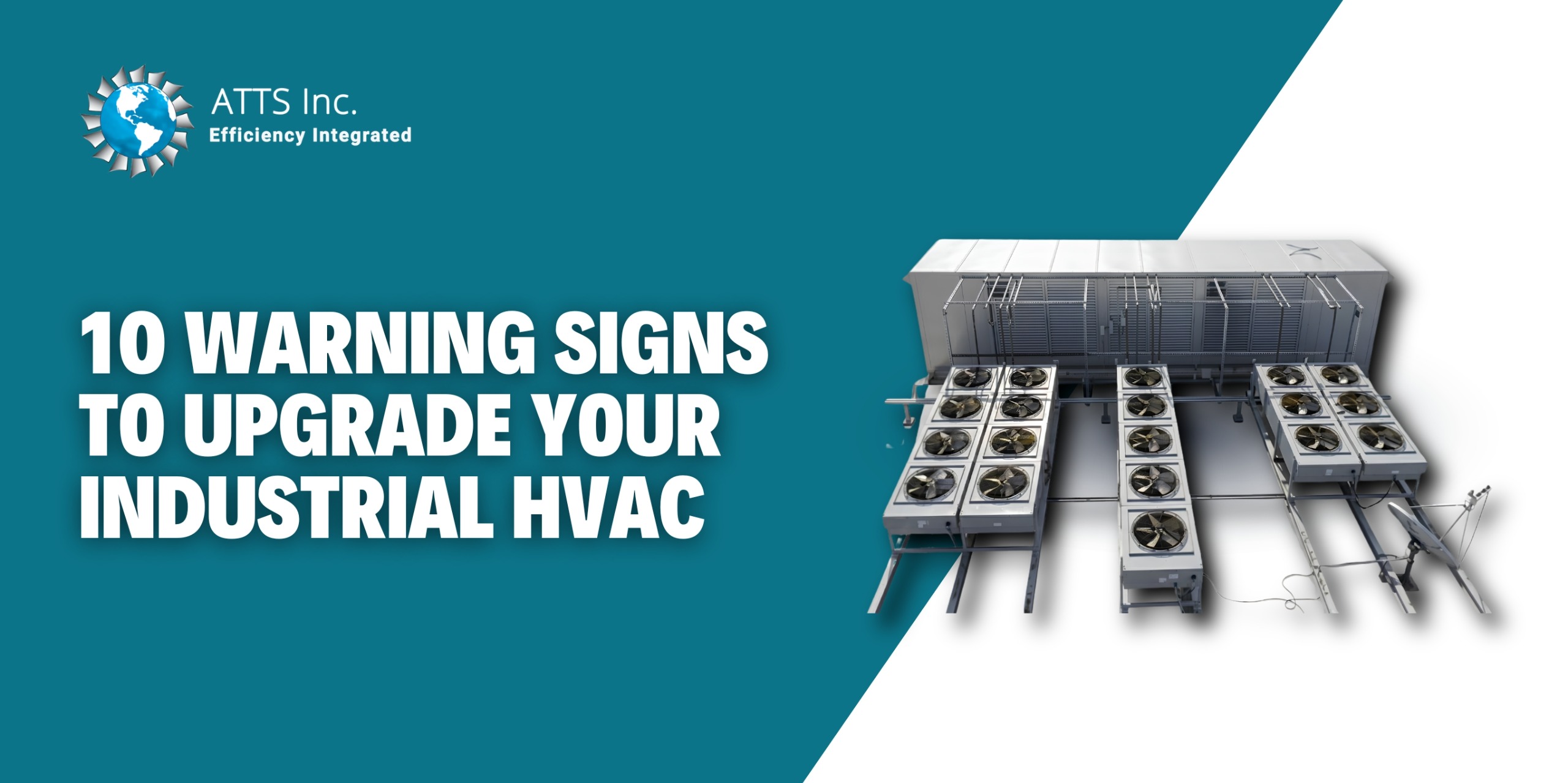
10 Warning Signs to Upgrade Your Industrial HVAC
Industrial HVAC systems are the backbone of temperature control, air quality, and equipment reliability in power plants and large facilities. However, like any critical system, they degrade over time.
The real question is:
👉 How do you know when it’s time to upgrade instead of repair?
This guide by ATTS Inc. is aligned with global industrial best practices and will help you identify the right time to act.
Why HVAC Upgrades Matter in Industrial Facilities
HVAC systems account for 40–50% of total energy consumption in commercial buildings, universities etc. making them a major cost driver.
Upgrading your system is not just about replacement—it’s about:
- Improving energy efficiency
- Enhancing operational reliability
- Meeting global environmental standards
- Reducing unplanned downtime
10 Key Signs Your Industrial HVAC System Needs an Upgrade
1. Rising Energy Consumption & Utility Costs
If your energy bills are increasing without higher production, your HVAC system is likely losing efficiency. Aging components such as compressors and fans require more energy to deliver the same output. Airflow issues, duct leakage, or improper system design can further increase power consumption. Over time, this leads to significantly higher operational costs. This is often one of the earliest signs that the system needs optimization or upgrade. Addressing this can greatly improve industrial HVAC energy efficiency and help reduce HVAC energy costs.
2. Frequent Breakdowns & High Maintenance Costs
Frequent repairs and unexpected failures indicate that your HVAC system is reaching the end of its lifecycle. As parts wear out, breakdowns become more common and harder to manage. This not only increases maintenance costs but also affects operational reliability.
- Repeated system failures
- High repair and spare costs
- Unplanned shutdowns
👉 Upgrade reduces long-term cost and improves HVAC system reliability
3. Inconsistent Temperature & Airflow Issues
Uneven cooling across different areas shows the system is struggling to maintain proper airflow. Some zones may receive too much cooling while others remain under-conditioned. This usually happens when the system no longer matches the current plant load. Changes in layout, production capacity, or equipment can also create imbalance. This directly affects process efficiency and equipment performance. Optimizing airflow improves industrial ventilation systems and ensures better temperature control.
👉 This is common in expanded or modified plants
4. Poor Indoor Air Quality (IAQ)
If you notice dust, odors, or contamination, your HVAC system may not be filtering or circulating air effectively. Poor indoor air quality can impact employee health and reduce productivity. In industrial settings, it can also affect sensitive manufacturing processes.
- Outdated filtration systems
- Poor ventilation design
- Increased contamination risk
👉 Clean air is critical for safe operations and meeting industrial air quality standards
5. Aging HVAC System
As HVAC systems age, their efficiency naturally declines and maintenance needs increase. Older systems often struggle to meet current performance demands. They also lack modern energy-saving technologies and smart controls. This makes them more expensive to operate over time. Upgrading helps improve efficiency, reliability, and overall system performance. Modernizing older systems is key to achieving better HVAC system lifecycle management.
👉 This is common in expanded or modified plants
6. Increasing Downtime Affecting Operations
HVAC system failures can directly affect plant operations and productivity. Even minor issues can lead to major disruptions in industrial environments. This can result in production delays and financial losses.
- Equipment overheating
- Production delays or stops
- Increased safety risks
👉 Impacts productivity and overall industrial plant efficiency
7. Outdated Technology & Lack of Smart Controls
Older HVAC systems lack advanced features like automation and real-time monitoring. This makes it difficult to track performance and identify issues early. Without predictive maintenance, failures often occur unexpectedly. Modern systems offer smart controls, better efficiency, and improved system visibility. This allows better decision-making and reduced operational risks. Upgrading enables the use of smart HVAC systems and predictive maintenance technologies.
👉 This is common in expanded or modified plants
8. Compliance & Environmental Regulations Issues
Industrial regulations for energy and environmental standards are becoming stricter. Older HVAC systems may fail to meet these requirements, leading to compliance risks. This can result in penalties or operational challenges.
- Fails compliance audits
- Higher emissions levels
- Risk of penalties
👉 Upgrade ensures compliance with energy efficiency regulations and industry standards
9. Increased Carbon Footprint & Sustainability Pressure
Inefficient HVAC systems consume more energy, increasing overall carbon emissions. This makes it harder to meet sustainability and ESG targets. Reducing energy consumption is now a key priority for many industries. Modern HVAC systems are designed for higher efficiency
and lower environmental impact. Upgrading supports long-term sustainability initiatives. It plays a key role in industrial decarbonization and reducing carbon footprint in manufacturing.
👉 This is common in expanded or modified plants
10. Facility Expansion or Process Changes
When your facility grows or processes change, your HVAC system may no longer be suitable for new requirements. Increased load and layout changes can reduce system performance. This leads to inefficiencies and uneven cooling.
- Increased cooling demand
- Layout modifications
- Additional equipment
👉 System becomes undersized, requiring HVAC system optimization or upgrade
Repair vs Upgrade: What Should You Choose?
Condition | Recommendation |
Minor issues, newer system | Repair |
Frequent failures + high cost | Upgrade |
High energy consumption | Optimize / Retrofit |
Outdated design | Redesign & upgrade |
👉 A professional evaluation (like ATTS provides) helps determine:
- Optimization vs Retrofit vs Replacement
🚀 Benefits of Upgrading Your Industrial HVAC System
✔ Improved Energy Efficiency
Modern systems significantly reduce energy usage and operating costs.
✔ Better Equipment Reliability
Stable temperature control prevents:
Overheating
Equipment failure
✔ Lower Maintenance Costs
Fewer breakdowns = reduced OPEX
✔ Enhanced Air Quality & Safety
Cleaner air = safer working environment
✔ Future-Ready Infrastructure
Supports:
Smart monitoring
Automation
Predictive maintenance
🏢 How ATTS-Style HVAC Services Add Value
A complete HVAC solution should include:
🔹 Design & Engineering
- Custom system design for industrial loads
🔹 System Optimization
- Energy audits
- Performance improvement
🔹 Retrofit & Modification
- Upgrading without full replacement
🔹 Installation & Commissioning
- End-to-end execution
🔹 Sustainable Solutions
- Energy-efficient systems
- Reduced environmental impact
Pro Tip: Don’t Wait for System Failure
Waiting for complete failure leads to:
- Emergency shutdowns
- High replacement costs
- Production losses
👉 Planned upgrades = controlled cost + zero disruption
FAQs
1. How often should an industrial HVAC system be upgraded?
Typically every 10–15 years, depending on usage, maintenance, and technological advancements.
2. What is the biggest sign that an HVAC system needs replacement?
Rising energy costs and frequent breakdowns are the most common and early indicators.
3. Is it better to repair or replace an industrial HVAC system?
If repair costs are high and frequent, replacement is more cost-effective long-term.
4. How does upgrading HVAC improve energy efficiency?
Modern systems use advanced components and smart controls to reduce energy consumption significantly.
5. Can upgrading HVAC systems help with sustainability goals?
Yes, it reduces energy usage, emissions, and carbon footprint, helping meet ESG and environmental targets.
Final Thoughts
Upgrading your industrial HVAC system is not just a maintenance decision—it’s a strategic investment in efficiency, reliability, and sustainability.
If you notice:
- Rising energy costs
- Frequent breakdowns
- Poor performance
👉 It’s time to evaluate your system.